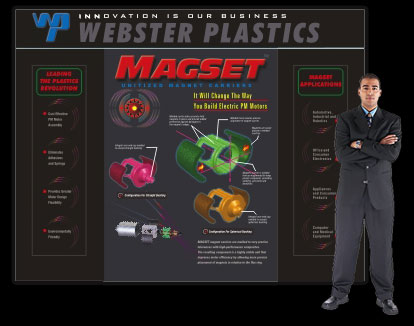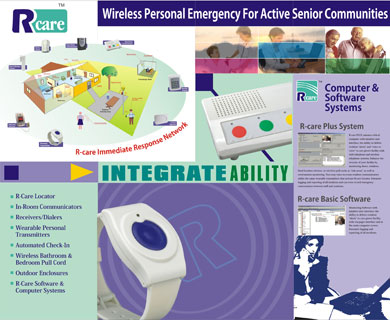










A sign should tell the story in as few words as possible. This is especially true in outdoor advertising. If you don't get the message, it's a bad billboard Outdoor billboards have to be very simple and to the point.
In the old days, posters were effective because pedestrians could stop and take the time to read them. Today, most often the viewer is zipping by a billboard at 60 miles per hour or more. You only have a split second to get your message across. The message has to be brief and the graphics instantly recognizable for the idea to hit home, otherwise it's a big waste of your money.
Signs are location specific. Unlike television and radio, by their physical nature, they only impact or draw the attention of local traffic. Therefore, high-traffic locations are most desirable. Area demographics are important as they are relative to the type of product advertised. The most popular use of signage, posters and displays are trade shows and retail establishments. In the retail environment they are sometimes referred to as point of purchase signs. They can be large wall signs or smaller counter signs combined with a pocket containing coupons or small brochures. In most cases, these signs are specific to a product , a brand name or a special offer.
Outdoor signs are designed to reach a larger audience, and provide higher impact with greater visibility. However, they too have a limited reach. Outdoor signs can be less effective than mass media (TV & radio) or more effective and less expensive than mass media. It all depends on your marketing strategy, your product and your target demographics. A well done outdoor sign can have a big impact especially in coordination with other media advertising. Of course, no marketing is effective if you fail to get the message across. .
A sign is most likely the oldest form of display advertising. As long as man has brought produce to market or needed to promote his establishment, he did so with a sign.
From simple hand made signs to elaborately carved and painted wooden signs, until printing came into being, it was the only way to promote your wares. Unknown at the time, the invention of printing was to foster the beginning of a new form of business...advertising. Printing made it economical to make multiple copies of signs, most particularly in the form of posters.
Without photography or type, the only way to get the idea across was with illustrations. It was the golden age of the illustrator. Everything had illustrations..books, posters, flyers, magazines and newspapers. Poster artists were an egocentric sort onto their own, comparable to today's art directors. They designed and illustrated the entire poster, including the hand drawn text. Today, early original posters are valuable collectibles.
We still make signs. The desire to put up a poster in a movie theatre, concert hall or the walls of a retail establishment has not diminished with the advent of mass media. There is something very unique about a printed poster. Is it the art? Is it the message? Or perhaps it gets our attention because we can stop and look at something static while the rest of the world keeps moving about. Whatever the reason, posters are still an important part of the advertising mix.

|
• Trade Show Graphics |
|
• Trade Show Posters |
|
• Outdoor Advertising |
|
• Backlit Signs |
|
• Point of Purchase Signs |
|
• Machine Graphics |
|
• Trade Show Booth Design |
|
• Outdoor Signs |
|
• Vinyl Signs |


Do you remember the days when most show booth signs were either screen printed text or were made of pasted up photographs and rectangular strips of photo type. How about the large hand painted paper signs in store windows?
Enter computers and digital imaging. Contrary to digital non-visionaries, the capabilities and potential of digital imaging had been know by many art directors and graphics industry professional well over 25 years ago! Commercial art directors knew the combination of computers and digital images opened new graphic frontiers and endowed them with more creative power and freedom than then ever before.
At first , this new creative power was limited to the print advertising world. Then it crept into video production. Gone was the hand-made TV show card and commercials began to captured our attention with special visual effects created with digital imaging technology. Thanks to the introduction of large format digital printers, it wasn't long before the sign making industry got in the act . It revolutionized the sign making industry overnight. Gone were the pasted up signs. Beautiful, imaginative and full blown color signs began to appear on trade show booths. Those who could afford them had a definite edge over the competition. Thanks to new-generation, large-format printers and improved digital imaging technology, huge full color signs can now be easily printed in a very short time and for a lot less money. Outdoor signs, backlit sings, cloth signs thanks to digital imaging, today you get more sign for your money.